
Empowering Healthcare Devices with SignOff’s ASIC SoC: Kaveri
The surge in demand for portable healthcare products has accelerated the need for embedded systems that offer low power consumption, compact size, and precise real-time processing of biomedical data. Pulse oximeters, which measure blood oxygen saturation (SpO₂) and heart rate, exemplify these requirements. This report examines the application of the Kaveri System-on-Chip (SoC) IP in developing a pulse oximeter prototype, highlighting the importance of SoC platforms in next-generation healthcare devices.
Advantages of Kaveri SoC for Embedded Healthcare
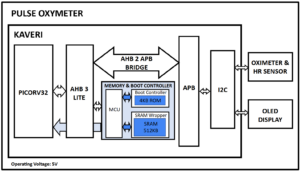
The Kaveri SoC is engineered as a lightweight, low-power platform for embedded applications, fully equipped with flexible peripheral interfaces and capable of robust real-time sensor data handling
Key Benefits
- Optimized Low Power: Extended battery life meets the demands of wearable and portable health devices
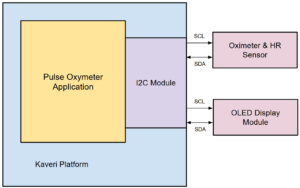
- Flexible Connectivity: Interfaces such as I²C, SPI, and UART allow seamless integration with sensors and displays
- Fast Data Processing: Minimal latency ensures accurate biomedical signal acquisition and analysis
These benefits make Kaveri a leading solution for wearable health tech, IoT healthcare devices, and portable medical monitors.
Designing a Portable Pulse Oximeter with Kaveri SoC
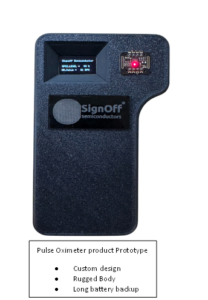
The prototype focuses on delivering accurate and real-time SpO₂ and heart rate readings within a compact, portable framework optimized for battery efficiency.
System Architecture
- Optical Sensor Module: Captures precise physiological signals
- Kaveri SoC: Manages sensor data collection, processing, and communication
- OLED Display: Presents clear, real-time SpO₂ and pulse rate data with low power consumption
Prototype Key Features
- Real-time monitoring of blood oxygen saturation and heart rate
- High accuracy via optical sensing technology
- Compact OLED module for user-friendly visualization
- Energy-efficient design suitable for wearable and portable use cases
- Scalable architecture for adapting to other biomedical sensors
Impact on Healthcare IoT and Wearable Devices
The healthcare industry is moving towards smarter, smaller, and connected devices. Kaveri SoC enables:
- Consumer Wearables: Advanced health tracking in fitness devices without draining battery life
- Medical-Grade Devices: Reliable, regulated performance in clinical settings
- Home Health Monitoring: Accessible, portable solutions for everyday wellness checks
Conclusion
By supporting integrated sensor data acquisition, rapid signal processing, and efficient visualization, the Kaveri SoC demonstrates the power of system-on-chip designs in advancing wearable and portable healthcare tech. As IoT healthcare demand grows, platforms like Kaveri will play a crucial role in shaping the future of embedded medical devices.