
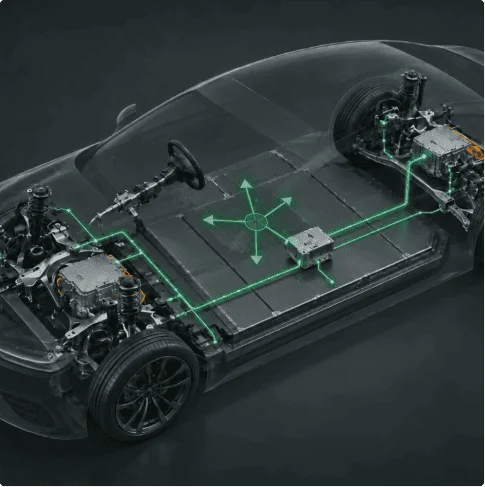

Automotive Semiconductor Solutions for Next Generation Mobility

Overview

Modern vehicles rely on semiconductor systems for sensing, processing, connectivity, infotainment, and advanced driver assistance. As vehicle electronics become more software-defined and connected, automotive chips must deliver the required performance, power efficiency, reliability, and system-level integration within increasingly complex architectures.
SignOff provides automotive semiconductor solutions across chip design, verification, embedded engineering, FPGA prototyping, physical implementation, and ASIC/SoC development. Its automotive experience spans ADAS and navigation systems, pedestrian detection, connected-car and infotainment systems, automotive sensors, sensor ASICs, and automotive components.

SignOff can support automotive semiconductor programs from architecture and RTL design through verification, prototyping, physical implementation, signoff, and tapeout, giving engineering teams access to capabilities across the semiconductor development lifecycle.

Applications

Automotive semiconductor requirements vary by vehicle function and system architecture. SignOff supports applications where semiconductor hardware, embedded software, and system integration must work together reliably.

Automotive.

01

ADAS & Intelligent Mobility

SignOff’s automotive experience includes ADAS and navigation systems and pedestrian detection. These applications require semiconductor systems capable of processing sensor and navigation data while supporting the processing and integration requirements of intelligent vehicle systems.

02

Connected Vehicles & Infotainment

SignOff supports connected-car and IoT-based infotainment applications that bring together semiconductor processing, connectivity, embedded software, and in-vehicle functionality.

03

Automotive Sensors

SignOff supports sensor-focused semiconductor development, including ASIC-based solutions for automotive sensing applications where dedicated hardware is required for application-specific processing and integration.

04

Electric Vehicles

As vehicle architectures become increasingly electrified, EV semiconductor solutions must support electronic systems with demanding requirements for processing, integration, reliability, and power efficiency. SignOff’s semiconductor engineering capabilities can support applicable chip and system requirements within EV-focused development programs.

05

Automotive
Components

SignOff supports semiconductor and embedded development for automotive components requiring application-specific hardware, processing, firmware, and system integration.

Capabilities

SignOff brings digital, analog, mixed-signal, embedded, and physical semiconductor engineering capabilities together to support automotive chip development.

Digital & SoC Design

SignOff's digital semiconductor engineering capabilities include architecture and microarchitecture, RTL design, IP integration, functional verification, formal verification, synthesis, and design-for-test (DFT).

These capabilities support development of digital semiconductor blocks as well as broader automotive SoC design requirements.

Automotive Chip Design Services

SignOff provides automotive chip design services across RTL development, IP integration, ASIC/SoC design, FPGA prototyping, synthesis, DFT, physical design, timing implementation, signoff, and tapeout activities.

Its automotive IC design services can also support designs requiring analog, mixed-signal, circuit, and layout engineering.

Analog, Mixed-Signal & Layout

Automotive semiconductor designs may combine digital processing with analog interfaces, sensing, and other mixed-signal functionality. SignOff supports analog and mixed-signal design and verification, along with block-, IP-, and chip-level layout.

Its layout capabilities also include post-layout extraction and physical verification to support implementation quality before tapeout.

Embedded & Firmware Engineering

Automotive semiconductor hardware must operate within a larger software and vehicle system. SignOff provides embedded development and firmware engineering capabilities to support the interaction between semiconductor hardware and automotive applications.

Testing & Verification

Automotive semiconductor verification must address functionality, integration, implementation, and physical correctness before manufacturing.

SignOff provides automotive semiconductor verification capabilities covering functional verification, formal verification, AMS verification, FPGA-based pre-silicon validation, and physical verification.

Together, these activities help identify design and implementation issues before manufacturing and provide greater confidence in tapeout readiness.

Physical verification activities can include:

Design Rule Checking (DRC)

Layout Versus Schematic (LVS)

Electrical Rule Checking (ERC)

Antenna checks

Density checks

ESD and latch-up checks

Related physical implementation checks

Testing & Verification

Automotive semiconductor development requires engineering processes that address predictable operation, verification coverage, physical implementation quality, and product-specific reliability requirements.

SignOff addresses these requirements through functional and formal verification, AMS verification, FPGA prototyping, physical verification, layout checks, and implementation-level analysis.

For programs involving automotive functional safety, SignOff can align engineering activities with the applicable customer requirements, safety objectives, development processes, and relevant standards. The specific safety methodology, compliance scope, and qualification requirements depend on the product, system architecture, and project requirements.

Integration

Automotive systems combine sensors, processors, communication interfaces, embedded software, firmware, and application-level functionality. Effective semiconductor development therefore requires hardware and software considerations to be addressed together.

SignOff supports this integration through RTL and IP integration, ASIC/SoC development, FPGA prototyping, embedded engineering, and firmware development.

This approach is relevant to ADAS semiconductor solutions, connected vehicles, automotive sensor systems, infotainment platforms, and other applications where sensing, processing, communication, and application layers must work together.

Lifecycle Support

SignOff can support an automotive semiconductor program at a specific engineering stage or across multiple stages of development.
Its turnkey ASIC capabilities can span:
SignOff can also support foundry and OSAT interface activities as part of the tapeout-oriented development process.

This enables automotive semiconductor teams to engage SignOff for focused engineering requirements while retaining the option of broader lifecycle support.

Why SignOff

Automotive semiconductor programs require coordination across chip design, verification, embedded engineering, physical implementation, and system integration. SignOff brings these disciplines together with experience across automotive applications.

Its automotive experience covers ADAS and navigation, pedestrian detection, connected-car and infotainment systems, automotive sensors, sensor ASICs, and automotive components.

Its broader semiconductor capabilities span digital frontend and backend engineering, analog and mixed-signal design, verification, FPGA prototyping, physical implementation, embedded development, and turnkey ASIC/SoC development.

This combination allows SignOff to support automotive semiconductor programs across design, verification, prototyping, integration, implementation, signoff, and tapeout.

Case Studies

SignOff’s automotive semiconductor experience includes work across:

01

ADAS and navigation systems

02

Pedestrian
detection

03

Connected-car and infotainment systems

04

Automotive sensors and sensor ASICs

05

Automotive component development

These applications demonstrate SignOff’s ability to apply semiconductor design, verification, embedded engineering, and implementation capabilities to automotive systems involving sensing, processing, connectivity, and integration.

Specific project scope, technologies, implementation details, and measurable outcomes can be shared based on applicable project disclosure requirements.

FAQs

Frequently Asked Questions

1. What semiconductor services does SignOff provide for the automotive industry? 

SignOff provides automotive semiconductor services covering digital chip design, ASIC/SoC development, verification, FPGA prototyping, physical design, analog and mixed-signal engineering, circuit and layout design, embedded development, and firmware engineering. Its automotive experience includes ADAS, navigation, pedestrian detection, connected-car and infotainment systems, sensors, sensor ASICs, and automotive components.

SignOff can support automotive chip development from feasibility, architecture, and microarchitecture through RTL design, IP integration, verification, FPGA prototyping, synthesis, DFT, physical design, timing implementation, signoff, and tapeout.
Yes. SignOff provides functional, formal, AMS, FPGA-based pre-silicon, and physical verification. Physical verification activities can include DRC, LVS, ERC, antenna, density, ESD/latch-up, and related implementation checks.
SignOff’s automotive experience includes ADAS and navigation systems and pedestrian detection, supported by chip design, embedded, and firmware capabilities. These capabilities can address semiconductor requirements for intelligent vehicle systems. Specific autonomous-driving requirements depend on the system architecture and project scope.
SignOff addresses reliability through functional and formal verification, AMS verification, FPGA prototyping, physical verification, layout checks, and implementation-level analysis. For automotive functional safety projects, engineering activities can be aligned with applicable product requirements, safety objectives, development processes, and relevant standards.
Yes. SignOff’s turnkey ASIC capabilities span feasibility, architecture, RTL design and verification, FPGA prototyping, synthesis, DFT, physical design, timing implementation, signoff, and tapeout, with foundry and OSAT interface support where required.
SignOff supports applications including ADAS and navigation, pedestrian detection, connected vehicles, IoT-based infotainment, automotive sensors and sensor ASICs, EV-related semiconductor requirements, and custom automotive components.

Contact / CTA

Engineer the Silicon Behind
Smarter Mobility 

From automotive chip design and verification to ASIC/SoC implementation, embedded engineering, integration, signoff, and tapeout, SignOff brings semiconductor engineering capabilities together for complex automotive development programs.